The global agriculture market is undergoing a transformative shift as farmers and stakeholders embrace renewable energy solutions to power modern operations. By integrating solar panels, wind turbines, and bioenergy systems, the industry is redefining traditional practices and boosting both efficiency and sustainability. This article explores key strategies, technological advancements, and market dynamics driving the adoption of clean energy across diverse farming landscapes.
Harnessing Solar Power for Agricultural Efficiency
Solar energy is one of the most accessible and scalable sources for farms seeking to reduce reliance on fossil fuels. The declining cost of photovoltaic (PV) modules, combined with government incentives, has accelerated installation across small family farms and industrial-scale operations alike. In regions with high insolation, solar arrays can supply a significant share of daily electricity demand, powering irrigation pumps, lighting systems, and climate-controlled storage facilities.
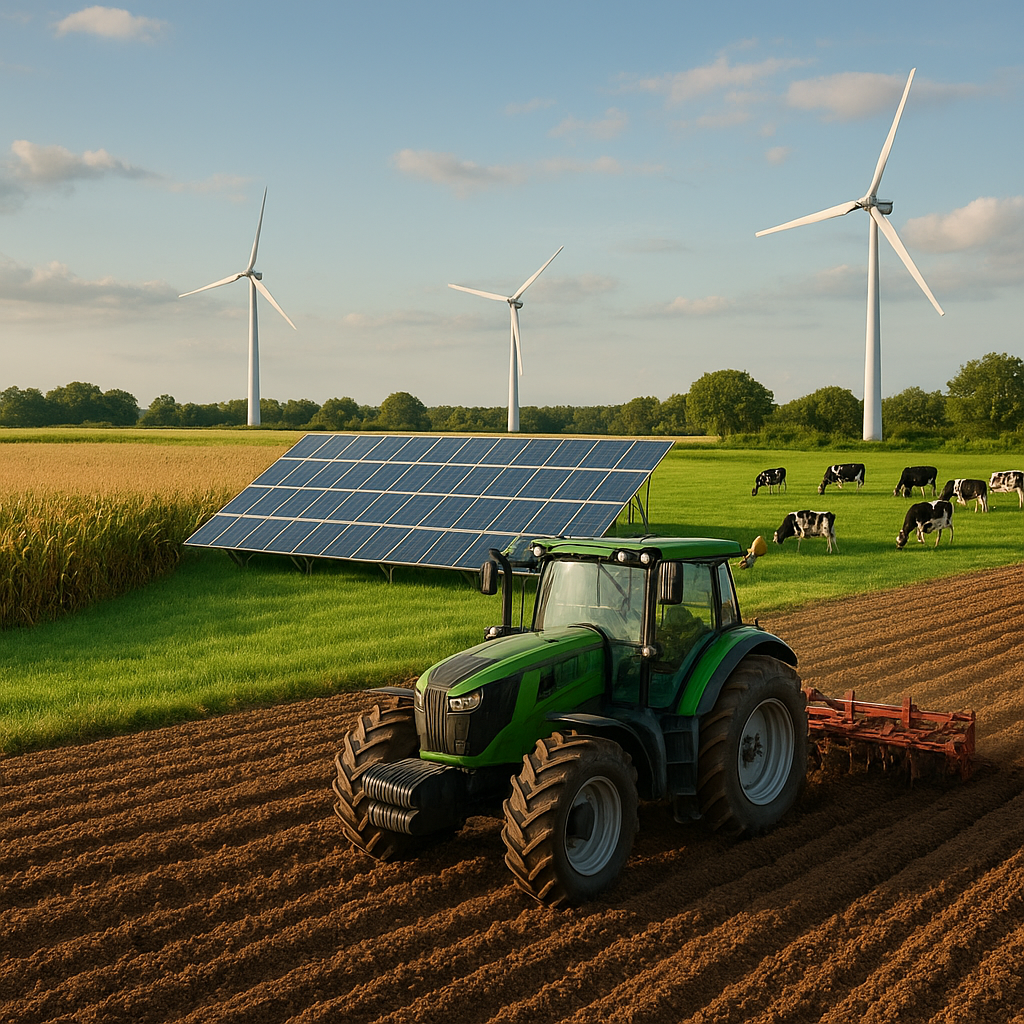
Moreover, the concept of agrivoltaics—co-locating crop production with solar panels—demonstrates remarkable potential to optimize land use. Elevated PV structures provide partial shading that can reduce heat stress on sensitive crops, leading to yield improvements for species such as lettuce, berries, and leafy greens. Simultaneously, farmers benefit from a steady revenue stream through energy sales or net-metering arrangements with local utilities. As this hybrid model gains traction, research institutions are conducting field trials to identify crop varieties best suited to dual-use plots, further enhancing the sector’s innovation potential.
Wind Energy Solutions in Rural Landscapes
Wind turbines have long been a hallmark of large-scale energy production, but advances in design and materials are enabling their deployment on smaller farms. Modern micro and small wind turbines can be erected on towers as low as 30 meters, generating between 5 kW to 100 kW depending on rotor diameter and local wind speeds. These systems often complement solar installations by producing power during windy periods, such as evenings and winter months when solar irradiation is low.
Off-grid farms and remote ranches benefit from hybrid wind-solar configurations coupled with battery storage, ensuring continuous power for critical operations. In coastal or hilly terrains, where wind speeds exceed 6 meters per second, small turbines can meet up to 40% of annual energy requirements. Manufacturers are refining blade materials and control algorithms to maximize output and reduce maintenance costs, thereby improving the profitability of wind-powered agricultural ventures.
Bioenergy and Waste-to-Energy Innovations
Converting agricultural residues, livestock manure, and crop processing by-products into biogas and biofuels addresses the dual challenge of waste management and energy generation. Anaerobic digesters transform organic feedstock into methane-rich biogas, which can be combusted on-site to produce heat and electricity or upgraded to biomethane for injection into natural gas grids. This approach reduces emissions by capturing methane that would otherwise escape into the atmosphere, while generating a nutrient-rich digestate that serves as organic fertilizer.
A number of integrated farms are exploring pyrolysis and gasification processes to convert rice husks, corn stover, and sugarcane bagasse into syngas and biochar. Biochar application to fields enhances soil structure, improves water retention, and sequesters carbon, contributing to enhanced resilience against erratic weather patterns. Collectively, bioenergy systems support a circular economy model, transforming on-farm waste into valuable resources and strengthening the sector’s environmental credentials.
Combining Renewable Systems and Emerging Technologies
Optimizing energy flows on farms increasingly relies on digitalization and advanced control systems. Internet of Things (IoT) sensors monitor solar array performance, turbine rotor speed, and battery health in real time, enabling predictive maintenance and operational adjustments. Smart inverters and energy management software facilitate dynamic load balancing, ensuring critical equipment—like greenhouse climate controls and milking parlors—receives uninterrupted power while exporting surplus electricity to the grid.
Energy storage solutions, ranging from lithium-ion batteries to flow batteries and supercapacitors, enhance the scalability of renewable installations. Paired with demand response programs, these storage assets allow farmers to shift consumption away from peak tariff periods, lowering operational costs. Additionally, remote monitoring platforms offer advanced analytics, forecasting energy yields based on weather predictions and crop cycles. By integrating renewable generation with precision agriculture tools—such as drone surveillance and automated irrigation—producers can achieve holistic resource optimization.
Global Market Trends and Policy Drivers
International demand for sustainably produced agricultural commodities is fueling investment in green energy solutions. Asia-Pacific and Latin America are witnessing rapid growth in farm-based solar and wind installations, while Europe continues to lead in bioenergy capacity. Public-private partnerships and international financing mechanisms, such as climate funds and green bonds, are helping emerging economies scale up projects that improve rural electrification and income diversification.
Policy frameworks, including feed-in tariffs, tax credits, and renewable portfolio standards, play a crucial role in shaping market uptake. Countries offering favorable net-metering regulations and performance-based incentives see higher adoption rates, as farmers weigh the long-term returns of initial capital outlays. Subsidies for energy-efficient equipment and training programs further accelerate the transition, empowering smallholders to participate in low-carbon value chains.
As global supply chains evolve to prioritize low-carbon inputs, traceability protocols and certification schemes—like carbon footprint labeling—are heightening the demand for renewable-powered agricultural products. Retailers and food manufacturers are forging off-take agreements that guarantee stable prices for growers deploying clean energy systems, thereby reinforcing the economic case for decarbonization and adaptation to climate-related risks.
Building Robust Infrastructure for Future Growth
Investing in grid interconnection, storage networks, and distributed energy resources is essential to support widespread deployment of renewable technologies on farms. Collaborative initiatives among utilities, technology providers, and agricultural cooperatives are fostering shared energy models, where multiple farms feed into microgrids and community energy hubs. These ecosystems enhance energy security and foster collective resilience during extreme weather events or supply disruptions.
Capacity-building efforts, including technical assistance and financing instruments tailored to small and medium-sized enterprises (SMEs), are pivotal in democratizing access to clean energy. By lowering barriers to entry and streamlining permitting processes, policymakers can enable wider participation in the green revolution transforming agriculture. The convergence of capital investment, innovative business models, and local knowledge will dictate how rapidly the sector achieves a net-zero future, underpinned by robust infrastructure and sustainable practices.