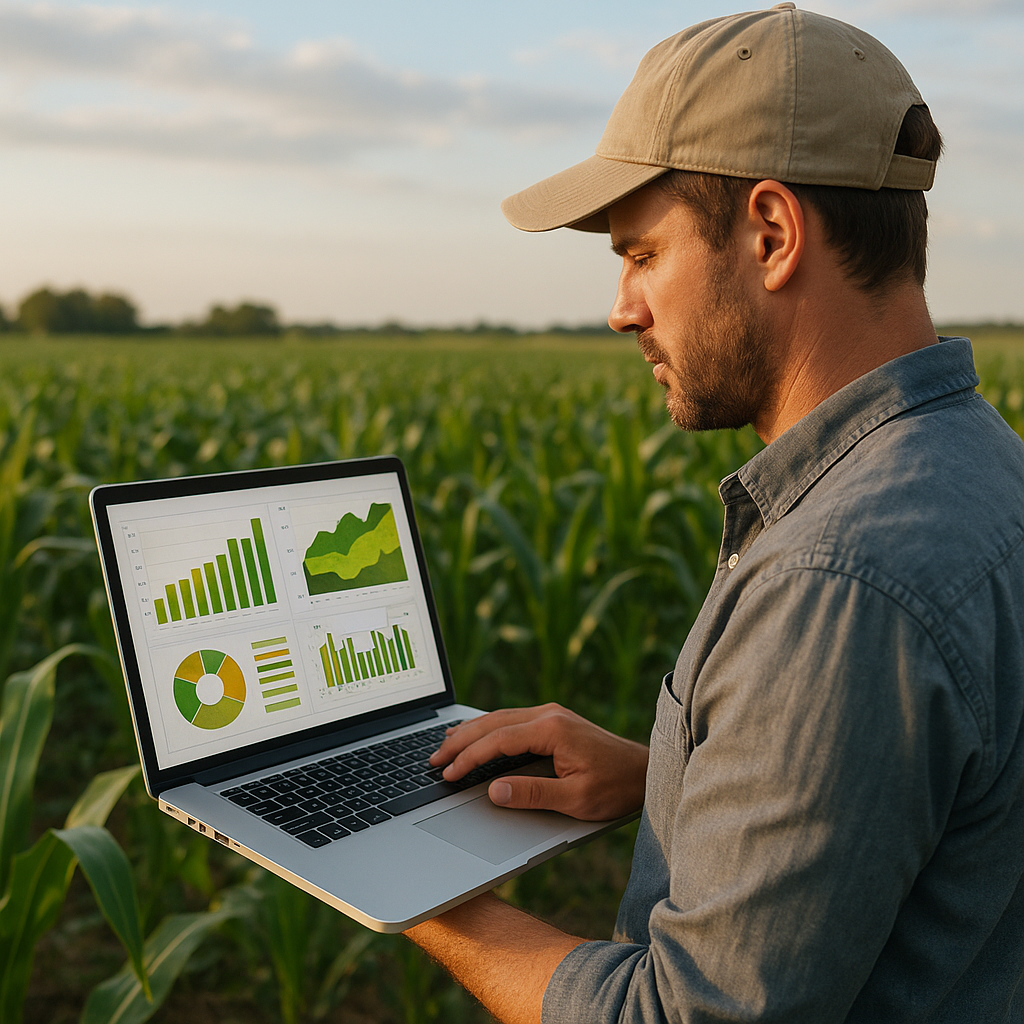
Agricultural Data Analytics: Turning Information into Profit explores how modern farming has evolved into a data-driven enterprise. This article delves into the forces reshaping the global agriculture market, the cutting-edge technologies enabling informed decision making, and the strategies agribusinesses employ to convert raw information into tangible returns.
Global Agricultural Market Dynamics
The global agriculture market is undergoing a profound transformation. While traditional farming once depended on manual expertise and rudimentary tools, today’s producers leverage vast streams of data to optimize every facet of crop and livestock management. Rising populations and shifting dietary patterns have intensified demand for higher yield, compelling stakeholders to adopt digital solutions that can sustainably scale output. In regions ranging from North America’s grain belts to Southeast Asia’s rice paddies, governments and private investors pour capital into initiatives that promote digital transformation and resource efficiency.
Key Drivers of Market Growth
- Population Expansion: Global population projections surpass nine billion by 2050, pressuring producers to boost productivity.
- Regulatory Pressures: Environmental regulations and food safety standards demand traceability and compliance.
- Consumer Preferences: The rise of organic, non-GMO, and ethically sourced products forces supply chain transparency.
- International Trade Dynamics: Tariffs, free trade agreements, and logistics networks influence commodity flows and pricing.
Market Segmentation and Regional Trends
Agricultural data analytics solutions target diverse segments, including arable crops, horticulture, and animal husbandry. North America and Europe dominate the adoption of high-end platforms, underpinned by advanced infrastructure and robust financing. Conversely, Latin America and Africa prioritize cost-effective mobile applications and localized advisory services, bridging the digital divide and addressing unique challenges such as water scarcity and soil degradation.
Advanced Technologies Driving Data Analytics
Several key technologies converge to power modern agricultural analytics. Integrating Internet of Things (IoT) networks with machine learning algorithms has unlocked unprecedented insights, enabling stakeholders to transition from reactive to proactive management.
IoT and Sensor Networks
Deploying fleets of wireless sensors across fields and livestock facilities allows continuous monitoring of soil moisture, ambient temperature, pH, and animal health metrics. These sensors feed real-time metrics into centralized platforms, where analytics engines flag anomalies and suggest corrective actions.
Remote Sensing and Geospatial Imaging
Satellites, drones, and aerial vehicles capture high-resolution imagery that, when processed through geospatial analysis tools, reveal patterns of stress, nutrient deficiencies, and pest infestations. By combining temporal data layers, farmers can trace the evolution of crop health over weeks or months, guiding variable-rate applications of fertilizers and agrochemicals.
Machine Learning and Predictive Models
Leveraging machine learning techniques, analytics platforms identify complex correlations among weather forecasts, soil variables, and crop performance. Predictive models generate yield forecasts and risk assessments, empowering agronomists to make early interventions and safeguarding harvest quality.
- Supervised Learning: Utilizes labeled datasets—such as past yields—to train models that predict future outcomes.
- Unsupervised Learning: Detects hidden structures in multi-dimensional datasets, unveiling new categories of stress factors.
- Reinforcement Learning: Optimizes irrigation and fertilization schedules through trial-and-error simulations, continuously improving strategies.
Monetizing Insights: Strategies for Profit
Transforming analytics into profit requires strategic alignment of technology investments, operational workflows, and market positioning. Data-driven agribusinesses adopt several tactics to capture and sustain financial gains.
Precision Agriculture and Input Optimization
By applying fertilizers, pesticides, and water only where needed—a concept known as precision agriculture—farmers can reduce input costs by up to 30%, while simultaneously enhancing crop uniformity. This targeted approach not only boosts profitability but also mitigates environmental impacts.
Dynamic Pricing and Market Intelligence
Analytics platforms aggregate commodity price trends, currency fluctuations, and trade policies to recommend optimal selling times and contract structures. Some cooperatives share aggregated performance benchmarks among members, enabling participants to negotiate better terms with buyers and processors.
Value-Added Services and Advisory Platforms
Agritech firms are introducing subscription-based models that deliver personalized advisory services. Through mobile apps and web portals, growers receive tailored recommendations, weather alerts, and peer comparisons. These platforms often offer tiered pricing, unlocking advanced features—such as predictive analytics and remote troubleshooting—for premium subscribers.
- Field Mapping Services: Comprehensive soil and nutrient mapping bundled with equipment calibration guidance.
- Crop Health Monitoring: Continuous surveillance with alert thresholds for disease outbreaks and pest pressures.
- Supply Chain Traceability: Blockchain-enabled solutions that prove origin and handling history for niche markets.
Challenges and the Road Ahead
Despite the transformative promise of agricultural analytics, several hurdles remain on the path to widespread adoption. Understanding these challenges is essential for stakeholders seeking sustainable growth.
Data Integration and Interoperability
Farms often rely on diverse hardware and software vendors, each with proprietary standards. Seamlessly combining data streams—from tractor telematics to weather stations—requires industry-wide protocols and open APIs. Without standardized frameworks, farmers face costly system integrations and risk information silos.
Security and Privacy Concerns
As agricultural operations become more digitized, they also become more vulnerable to cyber threats. Protecting sensitive yield records, financial transactions, and farm management plans demands robust encryption, secure cloud architectures, and clear data ownership policies.
Skill Gaps and Organizational Change
Large-scale data analytics necessitates new skill sets among agronomists and farm managers. Training programs and partnerships with agritech vendors help bridge this gap, but change management remains critical. Stakeholders must foster a culture of continuous learning and encourage collaboration between field teams and data scientists.
Future Prospects
Looking ahead, emerging innovations promise to further amplify the impact of analytics on agriculture. Edge computing will enable real-time decision-making at the sensor level, while advances in synthetic biology may integrate bioinformatics into crop monitoring. As artificial intelligence matures, autonomous farming systems could execute complex field operations—such as targeted weeding and pollination—without human intervention.
Ultimately, the ability to harness vast quantities of agricultural analytics data will dictate competitive advantage in a market driven by efficiency, traceability, and sustainability. Businesses that successfully identify high-value insights and convert them into strategic action will secure the next frontier of profit in global agriculture.