The spice market has evolved into a dynamic ecosystem shaped by shifting consumer preferences, complex supply chains, and technological breakthroughs. This analysis delves into the core forces that define the global landscape, exploring emerging patterns in production, assessing price behaviour, and evaluating regional opportunities. Emphasis is placed on the intersection of tradition and technology, as nations seek to balance heritage cultivation with modern approaches to meet surging culinary and medicinal demands.
Emerging Dynamics in Supply and Demand
Global trends reveal that demand for exotic and heritage spices continues to rise, driven by rising disposable incomes and expanding awareness of health benefits. Producers are responding with innovative cultivation methods, while traders navigate logistical bottlenecks to keep pace. The balance between supply and consumption now hinges on several critical factors:
- Climatic variability affecting harvest volumes
- Investment in cold‐chain infrastructure
- Adoption of precision agriculture techniques
- Emergence of specialty varieties targeting niche markets
Shifting Cultivation and Harvest Patterns
Traditional growing regions in South Asia and South America are experiencing erratic weather patterns, pushing farmers to adopt drought‐resistant strains and advanced irrigation systems. Yields for staples such as black pepper and cardamom now depend on real‐time monitoring of soil moisture and pest threats. Smallholder cooperatives are combining indigenous knowledge with drone‐assisted surveillance, resulting in more consistent output even in high‐risk zones. Exporters are increasingly contracting directly with local growers to secure year‐round volumes and reduce reliance on intermediaries.
Consumer Preferences and Health Trends
Shoppers in North America and Europe are seeking spices that offer antioxidant and anti‐inflammatory properties, driving interest in turmeric, ginger, and cinnamon. The rise of wellness‐oriented product lines has led brands to highlight standardized curcumin content or specify organic certification. Meanwhile, e‐commerce platforms have simplified access to rare spices, enabling end consumers to experiment with blends once confined to restaurant kitchens. As a result, producers are diversifying portfolios to include specialty chilli peppers, exotic peppercorns, and lesser-known seeds like ajwain and nigella.
Price Volatility and Forecast Models
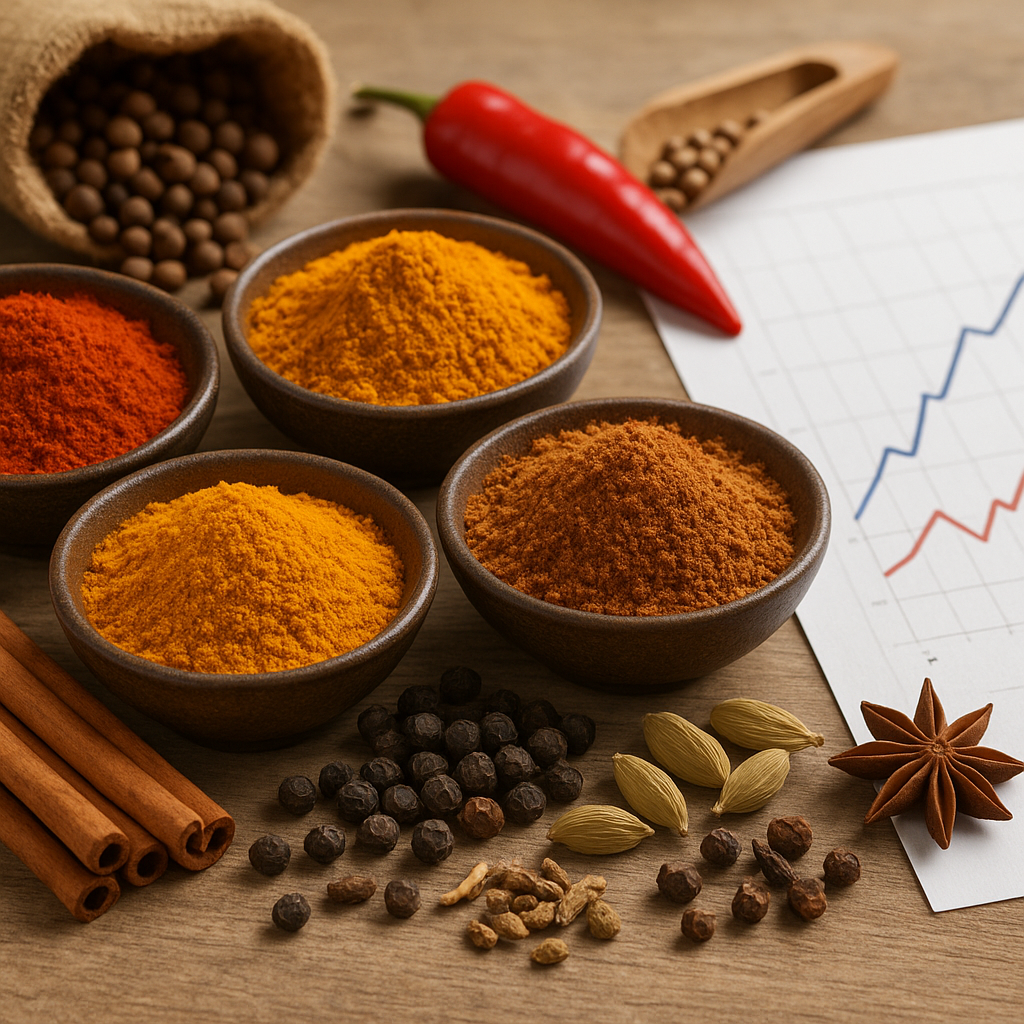
Spice pricing has become a focal point for agribusiness analysts and retailers alike. Prices can fluctuate sharply in response to currency swings, trade policy adjustments, and sudden climatic events. Understanding these oscillations is crucial for stakeholders aiming to stabilize costs and protect profit margins.
Factors Driving Price Swings
Several intertwined elements contribute to volatility in spice markets:
- Currency depreciation in exporting countries affecting local returns
- Tariff impositions altering trade flows overnight
- Crop failures due to monsoon delays or unexpected frosts
- Speculative buying during geopolitical tensions
For instance, a weak rupee can make Indian spices more affordable for international buyers, but domestic farmers may suffer reduced real earnings. Conversely, an unexpected frost in Vietnam’s pepper‐producing highlands can send global prices soaring, prompting immediate restocking by wholesalers in Europe and Asia.
Analytical Tools for Price Forecasting
Advances in data science have enabled the deployment of predictive algorithms that anticipate price trends based on historical patterns and real‐time indicators. Machine learning models ingest factors such as weather data, currency rates, shipping costs, and social media sentiment to generate forward‐looking price projections. Bulk purchasers and hedge funds are increasingly incorporating these insights into their procurement strategies, using futures contracts and options to manage exposure. Enhanced transparency in futures markets fosters better risk management for both grower associations and processing companies.
Regional Outlooks and Market Strategies
Each geographic region presents unique opportunities and challenges. An accurate regional analysis helps stakeholders craft tailored strategies for production, branding, and distribution.
Asia-Pacific
The Asia-Pacific region retains its status as the world’s leading supplier of spices, accounting for over two-thirds of global output. India remains dominant in pepper, cardamom, and turmeric, while Indonesia and Vietnam lead cinnamon and cloves production. Governments are investing in route modernization to reduce port congestion and transportation costs. Partnerships between research institutes and industry players have yielded high-yield, disease-resistant spice varietals. Export promotion councils are negotiating free-trade agreements to expand market access in Latin America and Central Europe.
Latin America and Africa
Emerging producers in Latin America, notably Brazil and Guatemala, are building processing facilities near cultivation zones to capture greater value. African nations like Ethiopia and Madagascar are reinforcing sustainable cultivation practices to enhance quality and fetch premium prices in specialty markets. Collaborative initiatives funded by international development agencies are training smallholders in post-harvest handling to minimize losses. As a result, market share for these up-and-coming regions is steadily rising, especially in the high-end food service sector.
Europe and North America
While Europe and North America rely heavily on imports, regional value-addition activities are on the rise. Facilities in the Netherlands and Germany specialize in spice milling and blending for private label brands, and North American spice houses are investing in R&D to develop proprietary blends for retail chains. Strict food safety regulations and certifications such as GlobalG.A.P. underpin consumer confidence. Retailers are leveraging traceability software to provide end-to-end visibility, enabling shoppers to scan QR codes and verify origin, harvest date, and quality grades.
Innovation and Sustainability in Spice Trade
Environmental and social governance (ESG) criteria are reshaping industry norms. Buyers are no longer satisfied with price competitiveness alone; they seek assurances that crops are grown and processed under ethical conditions. This focus on sustainability is prompting transformational changes across the value chain.
Technological Advances and Traceability
Blockchain and Internet of Things (IoT) sensors are being deployed to secure the provenance of high-value spices. Each batch can be tagged with a tamper-proof digital ledger, ensuring authenticity and deterring adulteration. IoT sensors monitor temperature and humidity throughout transit, reducing spoilage. Such innovations not only improve quality control but also strengthen brand reputation, enabling exporters to command higher premiums.
Community Empowerment and Fair Trade
Social initiatives are gaining traction, with cooperatives offering farmers training in sustainable agroforestry and equitable profit-sharing models. Fair trade certification not only elevates household incomes but also funds community development projects, from schools to healthcare clinics. By integrating smallholders into global supply networks through digital marketplaces, traders foster resilient value chains that can withstand market shocks. Consumers increasingly reward brands that uphold social equity, making ethical sourcing a key competitive advantage.