In an age where AI and data-driven technologies are reshaping industries, modern agriculture stands at the forefront of innovation. By harnessing predictive analytics and real-time monitoring, stakeholders across the globe can make informed decisions that enhance crop performance, reduce costs, and secure supply chains. This article explores how market predictions backed by advanced algorithms empower farmers to maximize returns in a volatile environment.
Market Predictions in the Era of Digital Farming
The transition from traditional practices to precision agriculture has been accelerated by the integration of AI models capable of processing massive datasets. Satellite imagery, soil sensors, and weather stations feed into cloud platforms where machine learning algorithms analyze trends. These data-driven insights are not merely retrospective but offer forward-looking forecasts on commodity prices, input costs, and demand fluctuations.
Key benefits include:
- Efficiency gains through optimized planting schedules.
- Reduced exposure to market volatility by anticipating price swings.
- Strategic input allocation—nutrients, water, and labor—based on predictive signals.
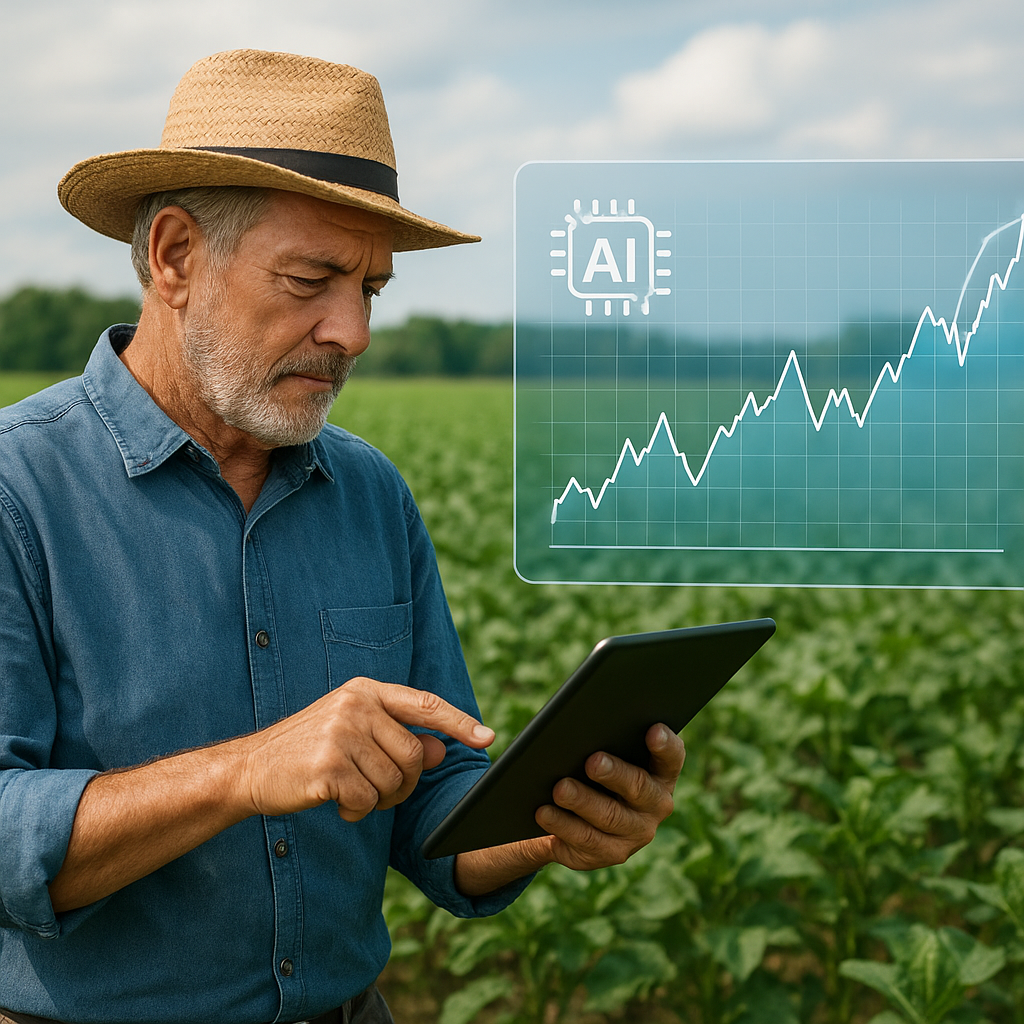
By combining agronomic expertise with analytics, cooperatives and individual producers can negotiate better contracts, plan storage capacities, and decide when to sell or hold inventory. In many regions, mobile applications equipped with AI dashboards allow smallholders to access forecasts previously available only to large industrial operations.
Implementing AI-Driven Forecast Models
Data Collection and Integration
Successful deployment begins with robust data pipelines. Precision sensors record soil moisture, pH levels, and microclimatic variables, while market data streams capture global trade flows. Integrating these heterogeneous sources requires a flexible architecture—often built on open APIs and scalable cloud services. Establishing data governance and validation protocols ensures that feeding garbage into the model is strictly avoided.
Model Training and Validation
At the heart of every predictive analytics engine lies a training phase. Historical yield records, commodity price archives, and even social sentiment (gleaned from news and social media) become features in complex models. Deep learning networks, random forests, and ensemble methods are tested against ground truth events. Continuous retraining adapts to new patterns caused by extreme weather, policy shifts, or sudden pest outbreaks.
Operational Integration
Turning model outputs into actionable business processes is a cultural shift for many farms. User-friendly dashboards present risk exposure charts, revenue projections, and recommended planting or selling windows. Alerts trigger when market anomalies exceed defined thresholds. Farm managers collaborate with agronomists and financial advisors to align operational plans with insights—ensuring that foresight leads to tangible profitability improvements.
Maximizing Returns through Strategic Planning
Armed with reliable forecasts, producers can deploy multi-pronged strategies to grow their bottom line:
- Hedging commodity positions in futures markets to lock in favorable rates.
- Dynamic resource allocation—shifting labor and equipment to high-margin crops.
- Optimizing transportation routes and storage locations, reducing spoilage costs.
Furthermore, AI-driven tools assist in risk management by simulating adverse scenarios. Producers can model the financial impact of a late frost or supply chain disruption, then purchase insurance or diversify crop portfolios accordingly. This proactive stance reduces dependency on government subsidies and fosters long-term resilience.
Collaboration across the value chain magnifies benefits. Grain elevators, processors, and retailers adopt compatible forecast systems, establishing a shared framework for decision-making. Real-time visibility into inventory levels and regional harvest forecasts allows buyers to secure supply ahead of competitors, while sellers achieve premium prices by timing deliveries.
Global Trends and Future Outlook
As international trade recovers from recent disruptions, the demand for staple crops, specialty commodities, and sustainable products is shifting. AI-driven market predictions serve as a compass, guiding investment in emerging markets and highlighting underutilized regions. Key future developments include:
- Integration of blockchain for transparent, verified traceability—boosting consumer trust in origin and quality.
- Expansion of satellite constellations providing daily coverage and ultra-high-resolution imagery for every farm plot.
- Development of autonomous machinery that responds in real time to predictive alerts—planting or irrigating based on forecasted weather windows.
Moreover, the rise of carbon trading schemes will create new revenue streams for sustainability-minded growers. AI platforms will quantify soil carbon sequestration, enabling farmers to monetize environmental stewardship while maintaining competitive margins. Partnerships between technology providers, research institutions, and local governments will accelerate adoption in regions currently underserved by digital infrastructure.
Ultimately, the convergence of agriculture, finance, and advanced computation promises a future where resource use is optimized, environmental impact is minimized, and global food security is enhanced. Supply chains become more resilient, price discovery more transparent, and smallholders gain leverage through collective intelligence networks. In this evolving landscape, those who embrace AI-driven innovation stand to reap the greatest rewards.