The global agricultural landscape is undergoing a profound transformation as farmers, agribusinesses, and governments seek innovative solutions to meet rising food demand while preserving precious resources. Precision agriculture has emerged as a powerful strategy to optimize inputs, minimize environmental impact, and enhance overall productivity on a global scale. By leveraging real-time data, advanced machinery, and intelligent decision-making tools, modern farms are evolving into high-tech ecosystems that deliver better yields with fewer inputs.
Global Market Dynamics and Challenges
The agricultural sector operates within a complex web of economic, social, and environmental pressures. A rapidly growing population, shifting consumption patterns, and tightening resource constraints are reshaping the global market. Key factors driving change include:
- Population Growth: The United Nations projects over 9 billion people by 2050, intensifying the need for increased food production.
- Climate Change: Unpredictable weather events, droughts, and floods disrupt traditional farming calendars and strain water supplies.
- Resource Scarcity: Soil degradation, freshwater shortages, and diminishing arable land demand more efficient use of inputs.
- Trade Fluctuations: Tariffs, export restrictions, and supply chain disruptions introduce volatility in commodity prices.
- Consumer Preferences: Growing demand for sustainably produced and traceable food requires transparency throughout the supply chain.
To remain competitive, producers must adopt smarter systems that boost efficiency, reduce waste, and ensure long-term viability.
Key Principles of Precision Agriculture
At its core, precision agriculture relies on the collection and analysis of granular data to tailor management practices at a micro-scale. Rather than applying water, fertilizers, or pesticides uniformly across an entire field, growers can make variable applications based on the unique conditions of each zone. The main components include:
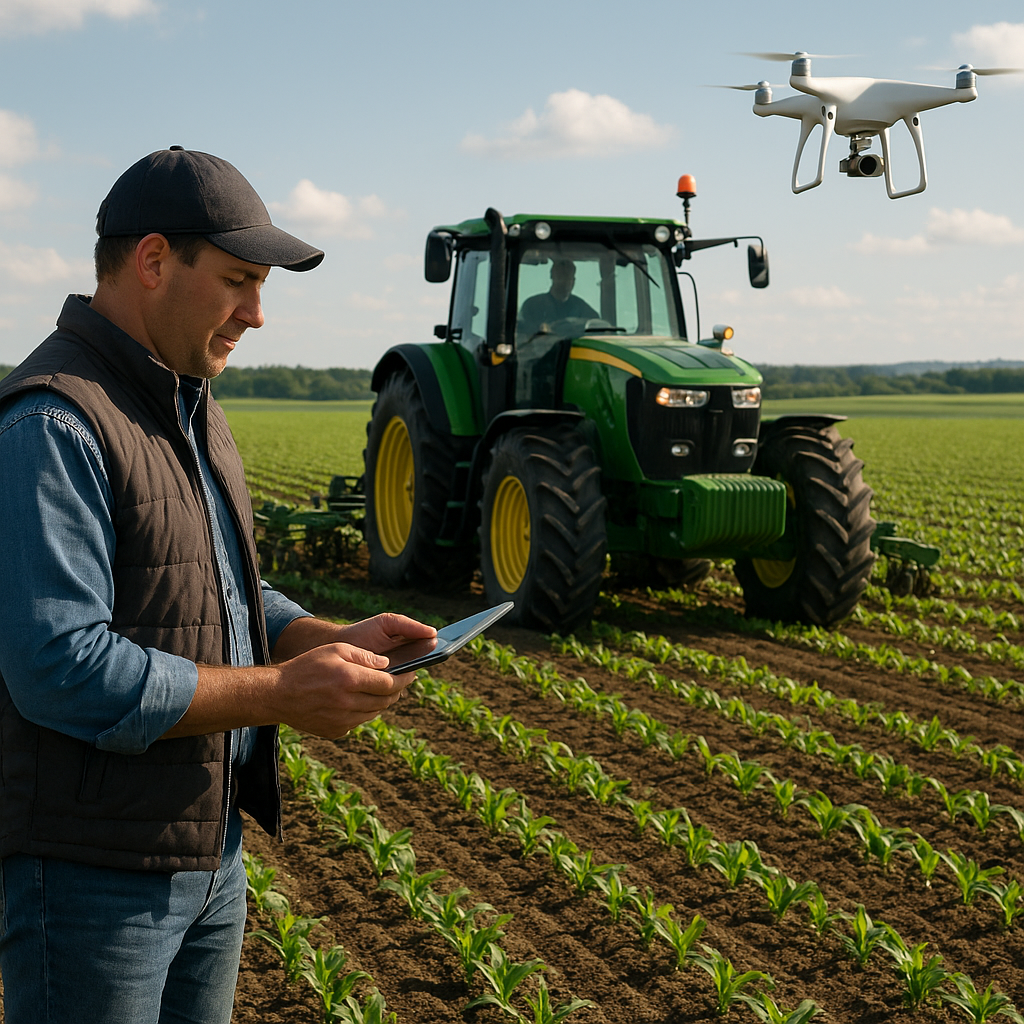
- Remote Sensing: Satellite imagery and aerial drones monitor plant health, soil moisture, and pest outbreaks in near real-time.
- Global Navigation Satellite Systems (GNSS): High-accuracy positioning enables precise mapping and machine guidance to within centimeters.
- Soil and Crop Sensors: Probe-based or wireless sensors measure nutrients, pH levels, temperature, and humidity directly in the field.
- Variable Rate Technology (VRT): Automated equipment adjusts input levels on-the-fly, optimizing seed spacing, fertilizer, and agrochemicals.
- Data Analytics: Cloud-based platforms aggregate multisource data streams and apply advanced algorithms to generate actionable insights.
By integrating these elements, farmers can develop site-specific management zones and implement precision seeding, targeted irrigation, and spot treatment of pests or diseases.
Technological Innovations Driving Productivity
Recent advances in engineering, artificial intelligence, and connectivity have accelerated the adoption of precision methods worldwide. Notable innovations include:
Autonomous Machinery
- Self-driving tractors equipped with machine vision and obstacle detection navigate fields without human intervention, reducing labor costs and increasing operational hours.
- Robotic harvesters selectively pick fruits and vegetables, minimizing crop damage and optimizing ripeness at each harvest point.
Drones and Aerial Platforms
- Unmanned aerial vehicles (UAVs) conduct multispectral imaging flights to assess plant vigor and detect stress factors long before symptoms appear to the naked eye.
- Spray drones apply fertilizers and crop protection products in small, targeted doses, significantly lowering chemical usage.
Artificial Intelligence and Predictive Analytics
- AI models ride on historical yield data, weather forecasts, and soil profiles to predict disease outbreaks, pest migration patterns, and nutrient deficiencies.
- Decision-support systems recommend optimal planting dates, irrigation schedules, and harvest windows based on simulated scenarios.
Internet of Things (IoT) Connectivity
- Wireless sensor networks continuously stream temperature, moisture, and pH measurements to centralized dashboards, enabling real-time monitoring and alerts.
- Edge computing devices process data on-site to minimize latency and ensure rapid responses to changing field conditions.
These tools empower farmers to make data-driven decisions, maximize resource allocation, and mitigate risks associated with weather variability.
Economic and Environmental Benefits
By embracing precision practices, agricultural stakeholders unlock multiple advantages that span financial, operational, and ecological domains:
- Increased Yields: Targeted interventions enhance plant growth rates and uniformity, often translating into double-digit yield improvements.
- Cost Savings: Reduced input wastage on fertilizer, water, and pesticides lowers production expenses and improves profit margins.
- Resource Conservation: Efficient irrigation and nutrient management limit water extraction and curtail nutrient runoff that pollutes waterways.
- Carbon Footprint Reduction: Optimized machinery usage and precise chemical application cut greenhouse gas emissions associated with field operations.
- Traceability and Compliance: Detailed records of every field activity support verification of sustainable practices for certification schemes and export standards.
Economic modeling reveals that the return on investment for precision technologies can be realized within three to five years, depending on farm size and crop type.
Market Trends and Adoption Drivers
The uptake of precision agriculture varies across regions due to differences in farm structures, infrastructure availability, and regulatory frameworks. Key trends shaping the market include:
- Digital Platforms: Agtech startups and established equipment manufacturers are launching integrated farm management suites that simplify data consolidation and interpretation.
- Subscription-Based Models: Farmers can access advanced analytics and remote support via pay-as-you-go services, lowering the barrier to entry for smallholders.
- Public–Private Partnerships: Government incentives, grants, and extension services accelerate technology diffusion in developing economies.
- Cross-Sector Collaboration: Collaborations between agritech firms, research institutions, and commodity traders drive standardization and interoperability of systems.
- Customization and Scalability: Modular hardware and software packages cater to diverse crop types, from row crops like corn and wheat to orchards and vineyards.
As connectivity expands in rural areas, adoption rates are expected to surge, unlocking new opportunities for precision solutions.
Case Studies in High-Tech Farming
Several success stories demonstrate how precision agriculture is reshaping productivity on a global scale:
Midwestern Corn Belt, USA
A consortium of farmers deployed variable rate fertilizer applicators and satellite guidance across 50,000 hectares of corn. Over three seasons, they achieved:
- 12% reduction in nitrogen input
- 8% increase in yield per acre
- 20% reduction in fuel consumption through optimized field logistics
Citrus Orchards, Spain
Growers implemented soil moisture sensors and AI-driven irrigation controllers to combat prolonged droughts. Benefits included:
- Water use efficiency improvements of 30%
- Enhanced fruit quality with uniform sugar content
- Real-time alerts to prevent overwatering and root diseases
Rice Plantations, Southeast Asia
Smallholder cooperatives adopted drone-based crop monitoring and mobile apps to share localized pest forecasts. Outcomes comprised:
- Early detection of brown planthopper infestations, reducing crop losses by 25%
- Collective bargaining power that lowered input costs by 15%
- Empowerment of women farmers through accessible digital tools
The cumulative impact of these initiatives highlights how sustainability and profitability can advance in tandem when precision techniques are skillfully applied.