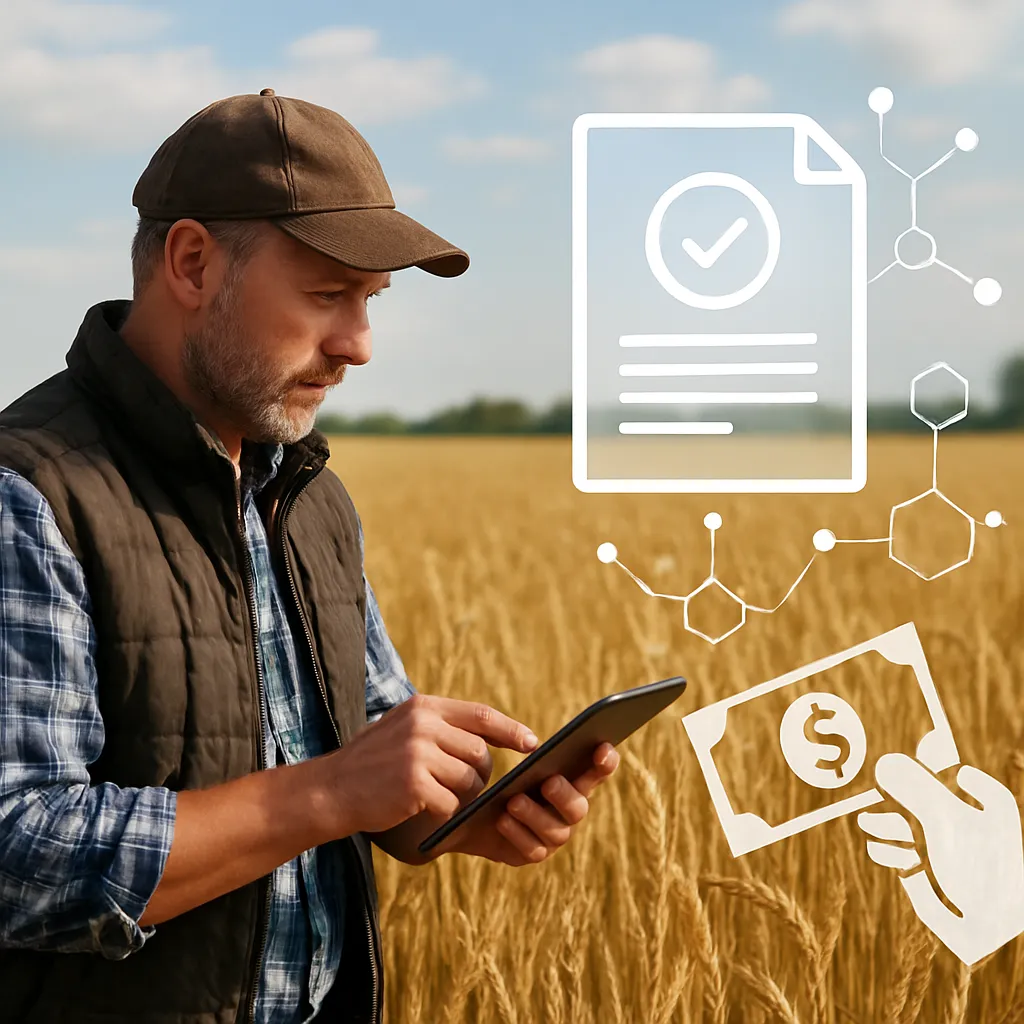
Agriculture has always been a cornerstone of economic development, linking rural producers with urban markets and global supply chains. As the sector grapples with fluctuating commodity prices, climate uncertainties, and shifting consumer demands, stakeholders seek innovative solutions to streamline trade and minimize risks. Leveraging distributed ledger technologies and digital agreements, **smart contracts** are emerging as a game-changer for agri-transactions, promising a new era of **transparency**, **efficiency**, and reduced operational **costs**.
Evolution of Agricultural Transactions
Historically, farm-to-fork transactions relied on a complex web of intermediaries: brokers, insurers, transporters, warehouses, and regulatory bodies. Each actor added time, paperwork, and potential for human error into the value chain. Cross-border deals often faced delays due to manual verifications, currency conversions, and compliance checks. In emerging markets, smallholder **farmers** struggled to secure fair prices or timely payments, as record-keeping remained fragmented and trust in counterparties was low.
Over the past two decades, digitization introduced electronic data interchange (EDI), online marketplaces, and mobile finance platforms. These tools enhanced information flow but still depended on centralized authorities. The arrival of **blockchain** technology offered a paradigm shift: an immutable, decentralized ledger where multiple parties could access, verify, and record transactions in real time. Building on that foundation, smart contracts automate agreements based on predefined rules, eliminating manual reconciliation and enforcing terms with mathematical precision.
- Paperless invoicing and instant payment triggers
- Real-time tracking of goods and quality parameters
- Automated compliance with export, import, and safety standards
Smart Contracts: A New Paradigm
At its core, a smart contract is a self-executing code snippet residing on a blockchain. When certain conditions are met—temperature sensors confirming cold-chain integrity or a delivery receipt uploaded to a distributed network—the contract automatically executes payment disbursements, title transfers, or penalty clauses. This level of **automation** boosts operational **efficiency** and fosters greater **trust** among parties who no longer depend solely on third-party escrow services.
Key attributes include:
- Security: Cryptographic safeguards prevent tampering and unauthorized alterations.
- Transparency: All participants view the same data, reducing disputes and information asymmetry.
- Traceability: End-to-end provenance of seeds, chemicals, and finished goods supports sustainability claims and meets regulatory demands.
For farmers, smart contracts can guarantee prompt payment upon proof of delivery. For traders, they mitigate price volatility by enabling option contracts that execute only when market rates align with agreed thresholds. Retailers and exporters benefit from assured product origin and quality certifications, which can be embedded directly into the contract code.
Transforming Supply Chain Dynamics
Beyond simple buy-sell agreements, smart contracts can orchestrate entire supply chain workflows. Consider a rice export scenario:
- Seed suppliers register genetics and germination data on-chain.
- Growers update harvest yields and moisture levels via IoT devices.
- Logistics providers log GPS-based transit checkpoints, verifying on-time departures and arrivals.
- Customs authorities cross-check tariffs and quarantine statuses, granting electronic clearances.
- Buyers confirm quality through digital lab reports attached to the contract, triggering automated payment.
Each step invokes smart contract functions, removing manual approvals and streamlining documentation. As a result, stakeholders witness shorter lead times, fewer disputes, and lower insurance premiums. Meanwhile, insurers can underwrite risk more precisely by accessing real-time data feeds, adjusting premiums dynamically based on verified conditions such as weather anomalies or transportation delays.
Agri-financiers also stand to benefit. By evaluating participants’ on-chain performance history, lenders can offer customized credit lines or advance funds at reduced interest, knowing that collateral and repayment terms are enforced programmatically. This fosters financial inclusion for small-scale producers, accelerating rural development and increasing food security.
Implementation Challenges and Future Prospects
Despite its promise, rolling out smart contracts in the global agriculture market faces hurdles. Key obstacles include:
- Technical literacy gaps among rural stakeholders, hindering adoption and trust in digital systems.
- Interoperability issues between multiple blockchain platforms and legacy enterprise resource planning (ERP) solutions.
- Regulatory uncertainties regarding digital signatures, cross-border data flows, and electronic evidence admissibility in court.
- Upfront infrastructure costs for IoT devices, connectivity solutions, and secure data oracles that feed real-world events to the blockchain.
To overcome these barriers, public-private partnerships are essential. Governments can establish legal frameworks recognizing the enforceability of digital contracts. Agricultural cooperatives and NGOs can spearhead training programs, empowering **farmers** to leverage new tools. Meanwhile, tech consortia and standards bodies must define common protocols for **data** exchange, quality assurance, and dispute resolution.
Looking ahead, the convergence of smart contracts with artificial intelligence and advanced analytics will unlock further value. Predictive models can trigger hedging contracts automatically when weather forecasts indicate supply risks. Dynamic pricing algorithms may adjust wholesale rates in real time, aligning incentives across the value chain. As blockchain networks migrate toward more energy-efficient consensus mechanisms, sustainability goals will strengthen, adding an environmental dimension to the **agri-transactions** revolution.
Through coordinated efforts, the agriculture sector can harness the full potential of smart contracts, transforming the way food, fiber, and biofuels move from fields to markets. In this emerging landscape, transparency, **security**, and **trust** will become the hallmark of global agri-trade, benefiting producers and consumers alike.