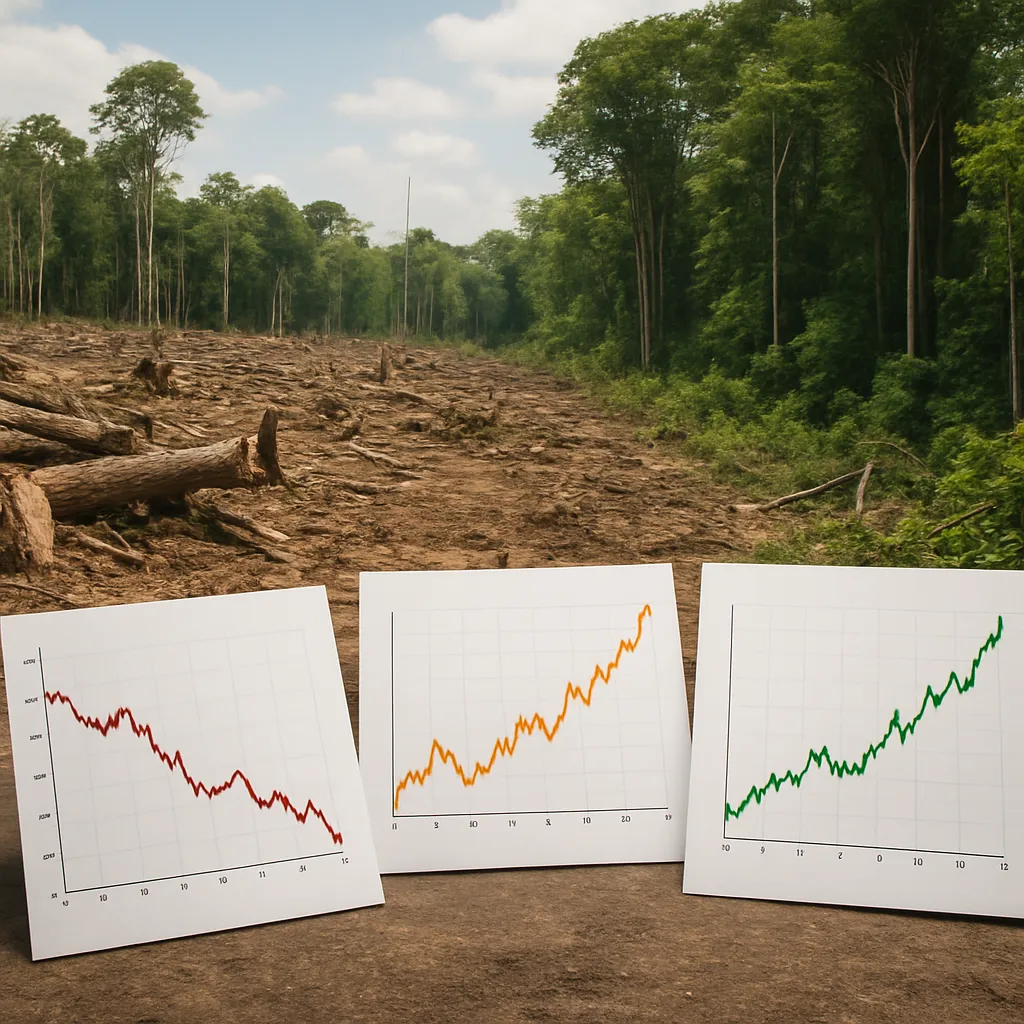
The intricate relationship between government directives on land use and the pricing of major agricultural products has become a focal point for economists, policymakers, and industry stakeholders. As nations intensify efforts to curb deforestation and promote environmental resilience, the ripple effects across global markets for soy, palm oil, beef, and other staples are growing more pronounced. This article explores how various policy tools shape cost structures, supply dynamics, and long-term price trajectories in the context of an ever-evolving sustainability agenda.
Interactions Between Deforestation Policies and Agricultural Commodity Prices
Regulatory measures aimed at reducing forest loss often include land‐use zoning, protected area expansion, and supply chain due diligence mandates. Such instruments can directly affect the availability of arable land and indirectly influence producers’ operational costs. For instance, when governments impose moratoria on clearing primary forests, large-scale farms may face constraints on expansion, leading to tighter domestic supply and upward pressure on global prices. Conversely, stringent import restrictions in major consumer markets can depress prices in exporting countries by limiting market access.
These dynamics underscore the critical role of market signals: price increases can incentivize further expansion into marginal lands, potentially undermining conservation goals. To balance this tension, policymakers are experimenting with mixed approaches that combine command‐and‐control regulations with market-based incentives. Programs like REDD+ (Reducing Emissions from Deforestation and Forest Degradation) reward jurisdictions for preserved forest stock, effectively internalizing the carbon costs that were traditionally external to agricultural production.
Policy Instruments and Mechanisms
- Moratoria on land clearing, often targeting primary forests in tropical regions
- Trade embargoes or differential tariff rates for agricultural imports linked to deforestation risk
- Mandatory supply chain transparency and traceability requirements
- Certification schemes (e.g., Roundtable on Sustainable Palm Oil) to verify certification compliance
- Financial mechanisms rewarding carbon sequestration and ecosystem conservation
Cost Implications for Producers and Traders
Compliance with new land‐use and environmental guidelines often entails incremental investments in monitoring, reporting, and traceability technologies. Large agribusinesses may absorb these costs more easily thanks to economies of scale, whereas smallholder farmers could face a steeper financial burden, potentially prompting consolidation in the farming sector. Traders, too, must adapt their procurement strategies, sourcing from regions with clear deforestation-free credentials to avoid reputational and legal risks.
Higher certification and compliance expenses tend to be passed along the supply chain, ultimately influencing retail prices. A study comparing the production cost of certified versus non-certified palm oil found up to a 10% premium for sustainable batches. Moreover, enhanced due diligence requirements can slow logistical processes, creating temporary bottlenecks that further elevate spot market prices during peak demand periods.
Case Studies in Major Commodities
Soybean in Brazil
Brazil accounts for roughly 35% of global soybean exports, with a significant share coming from the Cerrado and Amazon regions. Recent enforcement of the Forest Code, which mandates a minimum percentage of private land be preserved as legal reserve, has restricted the conversion of new areas for soy cultivation. The resulting supply squeeze has contributed to periodic price spikes on the Chicago Board of Trade, where international buyers hedge their positions. At the same time, state‐level initiatives in Pará and Mato Grosso offer purchase tax rebates for soy sourced from deforestation-free farms, effectively creating a price differential that rewards compliance.
Palm Oil in Indonesia and Malaysia
Indonesia and Malaysia supply over 80% of the world’s palm oil, a commodity intimately linked to tropical deforestation. In response to mounting pressure from the European Union’s Deforestation Regulation, both countries introduced strict licensing and geospatial monitoring systems. While these measures have improved transparency, they also raised operating costs for smallholders who now require GPS devices and satellite subscriptions. The net effect has been a 5–7% increase in the price of certified sustainable palm oil (CSPO), a trend expected to continue as global consumption shifts toward lower-carbon options.
Beef in the Amazon Basin
Beef production is a primary driver of forest conversion in the Amazon. A landmark cattle‐deforestation agreement in 2020 compelled ranchers to document herd origins and restrict purchases from illegal deforesters. This agreement introduced a cost premium for traceable beef, which traders have partly passed on to consumers under the banner of environmental stewardship. Analysts estimate that the Amazon beef price has risen by 8% relative to non-Amazon beef since implementation, underscoring the market influence of targeted environmental pacts.
Market Responses and Future Outlook
Consumer preferences are shifting toward brands that transparently demonstrate zero-deforestation footprints. Retailers and food manufacturers are entering long-term offtake agreements with producers who can guarantee compliance, effectively locking in price premiums for sustainable outputs. Meanwhile, financial institutions are increasingly tying loan conditions to environmental performance metrics, thereby aligning credit costs with deforestation risk profiles.
Looking ahead, digital innovations such as blockchain-based traceability and drone-enabled deforestation surveillance promise to further reduce verification costs. Combined with evolving regulatory landscapes, these tools could narrow the price gap between sustainable and conventional commodities, encouraging broader adoption. However, success will hinge on robust governance frameworks that mitigate loopholes and ensure equitable access to technology for smallholders.
Risks and Opportunities
- Potential market volatility as new regulations take effect and stakeholders adjust supply routes
- Opportunities for emerging economies to differentiate exports through high-standard sustainability credentials
- The necessity of international cooperation to prevent regulatory arbitrage and resilience in global supply chains
- Long-term benefits of integrated landscape approaches that harmonize agricultural expansion with forest preservation