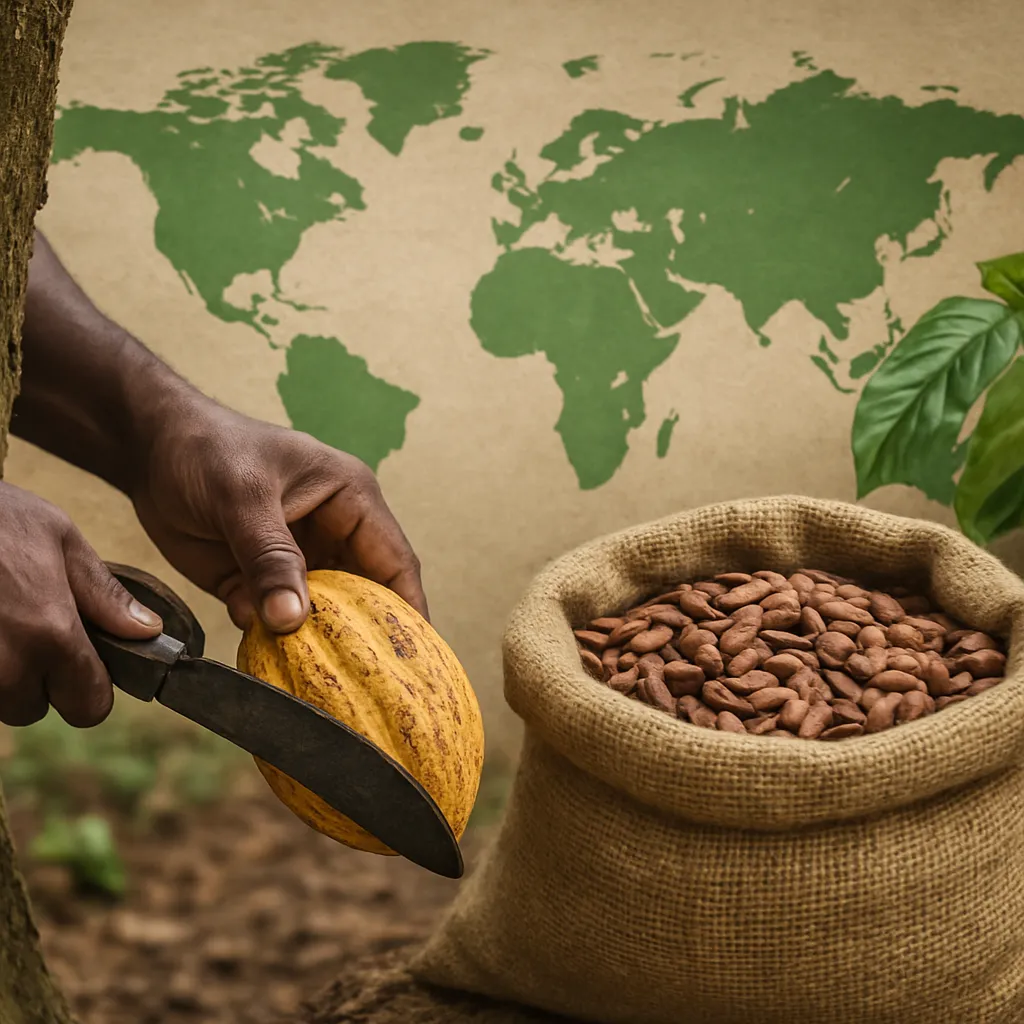
The production and trade of cocoa resonate deeply across tropical regions, connecting millions of smallholder farmers to urban markets and chocolate consumers worldwide. In this article, we explore the intricacies of the global cocoa market, examining the forces shaping supply, demand and pricing, while shedding light on the pressing sustainability challenges that threaten both the environment and rural livelihoods.
Market Structure and Economic Impact
The cocoa industry represents one of the most traded agricultural commodity chains in the world, valued at over USD 100 billion annually. Two thirds of total output is destined for confectionery products, while the remainder supplies cosmetics, pharmaceuticals and premium cocoa butter. Market concentration is high: the west African nations of Côte d’Ivoire and Ghana together account for roughly 60% of global cocoa bean production.
Despite its significant economic footprint, the sector is characterized by price volatility, largely driven by fluctuating yields, currency movements and speculative trading on commodity exchanges. Farmers frequently face incomes below living wage benchmarks, undermining rural development and exacerbating cycles of poverty.
Key Producing and Consuming Regions
Top producers include:
- Côte d’Ivoire (approx. 40% of world output)
- Ghana (20% of output)
- Indonesia
- Nigeria
- Ecuador
The major consumer markets are led by the European Union, the United States and emerging Asian economies such as China and India. Shifting consumption patterns and rising per capita chocolate demand in Asia present new growth opportunities for exporters, yet also feed debates on equitable trade terms and benefit sharing.
Supply Chain Dynamics and Price Volatility
The cocoa supply chain encompasses multiple actors, from smallholders to local aggregators, exporters, processors and global traders. Excessive intermediation often leads to limited transparency, complicating efforts to improve market traceability and ensure farmers receive fair compensation.
Price determination generally hinges on futures contracts traded on the London and New York exchanges. Short-term spikes or plunges can drastically alter planting decisions, risk appetites and investment in farm rehabilitation. Without robust risk management tools, smallholders remain vulnerable to market shocks.
Sustainability Challenges in Cocoa Production
Environmental and social pressures are central to the industry’s future. Key challenges include:
- Deforestation: Forest clearance for new plantations has contributed to biodiversity loss and increased greenhouse gas emissions.
- Child labor and forced labor: Inadequate regulatory oversight and pervasive poverty have perpetuated labor abuses in some producing regions.
- Soil degradation and aging trees: Overcultivation without adequate soil conservation reduces productivity over time, pressuring farmers to clear additional land.
- Climate change: Rising temperatures, shifting rainfall patterns and extreme weather events threaten suitable cocoa-growing zones and can decimate yields.
Tackling these issues demands coordinated action across public institutions, private companies and civil society. An estimated 70% of cocoa is certified under various schemes, but actual impact remains uneven, with some programs criticized for high costs and limited on-the-ground benefits.
Initiatives and Certification Schemes
The industry has launched multiple frameworks and partnerships aimed at promoting sustainability and improving farmer livelihoods:
- Cocoa & Forests Initiative: A global alliance of companies and governments working to end deforestation and restore forest ecosystems.
- Rainforest Alliance and UTZ: Certification programs intended to reward responsible practices through premiums and technical assistance.
- Fair trade networks: Ensuring minimum price thresholds and community development funds to support social projects.
- Public–private partnerships: Collaborations to strengthen cooperatives, enhance nursery quality and introduce climate-smart agriculture methods.
While these schemes foster progress, critics argue that certification alone cannot resolve deep-rooted inequalities or fully eliminate unsustainable practices without enforceable regulations and market incentives aligned with environmental goals.
Innovations in Sustainable Cocoa Farming
Emerging solutions seek to combine technology with agroecological principles to bolster resilience and productivity. Innovations include:
- Mobile-based platforms for real-time farm data collection, facilitating targeted extension services and financial inclusion.
- Agroforestry systems that integrate shade trees and diversify income streams, enhancing soil health and supporting biodiversity.
- Biotechnology efforts to develop disease-resistant and higher-yielding cocoa varieties, reducing the need for land expansion.
- Blockchain trials to reinforce traceability from bean to bar, building consumer trust and enabling premium pricing for verified sustainable produce.
Such approaches highlight the sector’s potential to reconcile economic growth with environmental stewardship, provided investments reach the farm level and local communities drive decision-making.
Socioeconomic Implications and Farmer Empowerment
Smallholder households account for over 90% of cocoa farmers. Improving their conditions is central to achieving equitable value distribution. Priority areas include:
- Access to affordable financing and microcredit for inputs, post-harvest equipment and farm renovation.
- Capacity-building programs that strengthen farmer cooperatives and enhance negotiation power in supply chains.
- Gender-sensitive initiatives that recognize the pivotal role of women in cocoa production and household welfare.
- Livelihood diversification through intercrops, livestock integration and alternative income-generating activities.
Empowering producers not only boosts on-farm yields but also promotes rural development, reducing the impetus for forest encroachment and child labor.
Emerging Trends and Future Prospects
As consumer awareness and corporate accountability intensify, stakeholders are increasingly aligning around net-zero deforestation targets and regenerative agriculture. Market drivers include sustainability-linked financing, consumer preferences for ethically sourced products and regulatory measures banning imports tied to illegal land conversion.
The path ahead hinges on scaling successful pilot projects, harmonizing certification standards and leveraging digital tools to streamline data collection. Public policy will play a critical role in incentivizing best practices, enforcing labor regulations and facilitating land tenure security for rural communities.
Ultimately, the resilience of the cocoa sector will depend on its ability to cultivate partnerships that balance profitability with climate action, social equity and ecosystem restoration. Only through such integrated efforts can the world continue to savor chocolate delights while safeguarding the planet’s health and the prosperity of millions of smallholder families.